
What Are the Advantages of Ground Source Heat Pumps?



Ground source heat pumps are becoming more common in UK homes and developments. As energy prices rise and low-carbon heating becomes the standard, many people are asking about the advantages of ground source heat pumps and whether they are worth the investment.
Ground source heat pumps use heat stored in the ground to provide heating and hot water. If you’re new to the technology, you can read more about how a ground source heat pump works in our detailed article.
Below, we explain the main advantages of ground source heat pumps in simple terms.
1. Higher Efficiency and Lower Running Costs
One of the biggest advantages of ground source heat pumps is their efficiency.
The ground stays at a stable temperature throughout the year. Because of this, a ground source heat pump does not need to work as hard in winter as other systems might. Many systems achieve a Seasonal Coefficient of Performance (SCOP) of 4.0 or higher. This means for every 1kWh of electricity used, around 4kWh of heat is produced.
Over time, this can lead to lower and more stable energy bills compared to fossil fuel heating. As the UK electricity grid becomes greener, the long-term case for electrified heating continues to strengthen.
2. Long Lifespan and Low Maintenance
One of the key advantages of ground source heat pumps is their long lifespan.
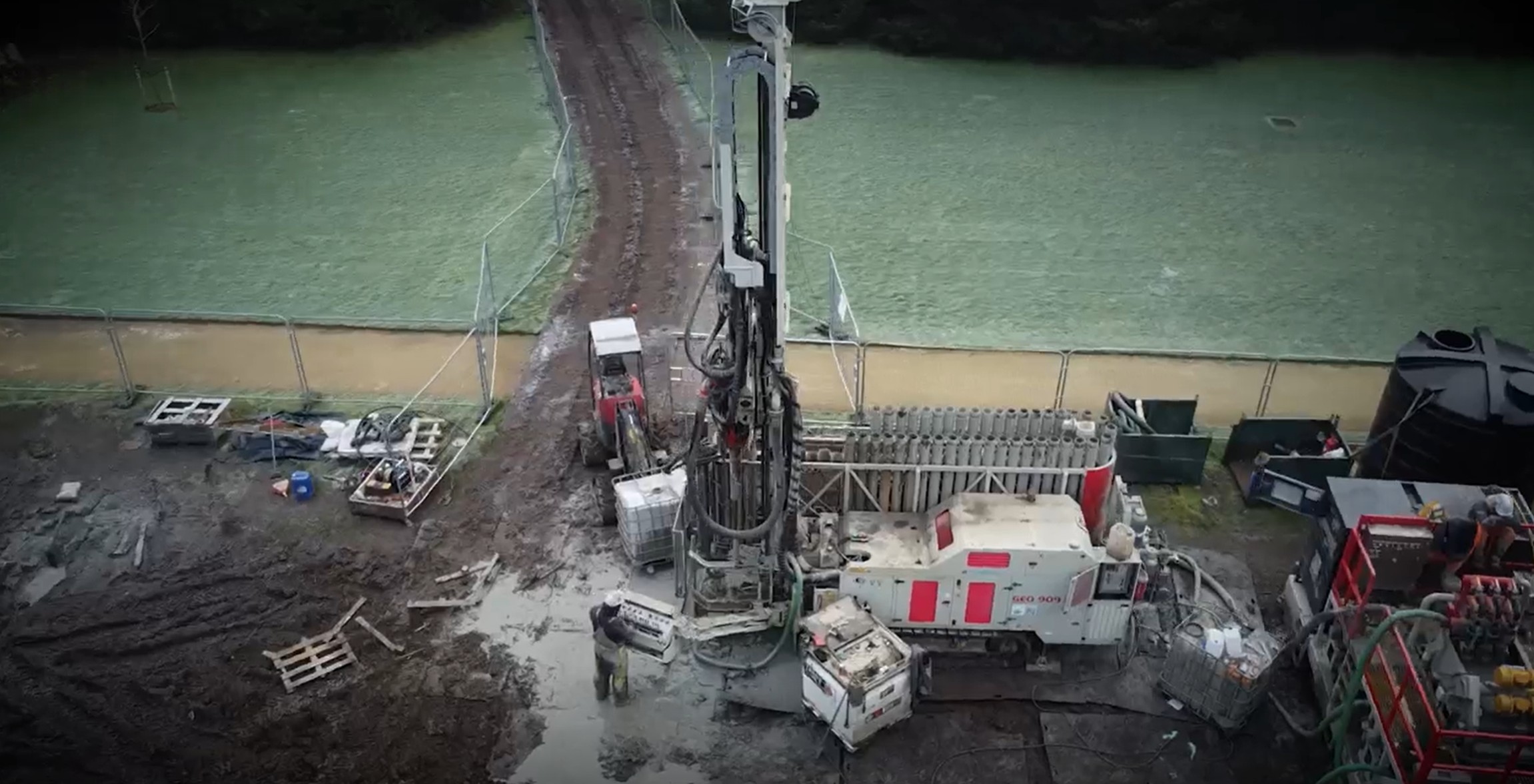
The underground pipework, usually installed through borehole drilling, can last 100 years or more. The heat pump unit itself typically lasts around 20–25 years, in line with independent data on geothermal heat pump lifespans. This makes the system more like long-term infrastructure than a short-term appliance.
Because ground source heat pumps do not rely on fuel combustion, they experience less wear than traditional boiler systems. There are fewer components exposed to high temperatures, which helps reduce breakdown risk and ongoing servicing needs.
For homeowners, this means lower maintenance costs and fewer unexpected repairs. For developers, it provides durable, long-term asset value.
If you would like to understand how boreholes are installed and how much space is required, read our guide to borehole drilling for ground source heat pumps.
3. Quiet and Invisible Operation
Ground source heat pumps run quietly. There are no large external fan units, which makes them ideal for urban areas or high-density housing.
This reduces the risk of noise complaints and avoids visual impact on building façades or gardens. In developments, this can simplify planning discussions and improve overall site design.
For homeowners, it simply means heating that works in the background without disruption.
4. Stable Performance in Cold Weather
Unlike systems that rely only on outside air temperature, ground source heat pumps benefit from stable ground temperatures. This means performance remains consistent even during colder months.
For homeowners, this provides reliable comfort. For developers, it reduces performance risk and potential call-backs.
5. Heating and Cooling in One System
Another advantage of ground source heat pumps is that they can provide both heating and cooling.
In winter, the system extracts heat from the ground and transfers it into the home. In summer, the process can be reversed, removing heat from inside the building and transferring it back into the ground.
This provides gentle, energy-efficient cooling without the need for separate air conditioning systems. For homeowners, this means year-round comfort from one integrated system.
As UK summers become warmer, this dual-function capability is becoming increasingly important.

6. Lower Carbon Emissions
Ground source heat pumps are a low-carbon heating solution.
Because they move heat rather than create it through combustion, they are much more efficient than traditional gas boilers. As the UK grid continues to decarbonise, emissions associated with heat pumps will continue to fall.
This aligns with national policy, including the UK Net Zero Strategy.
For homeowners and developers looking to reduce carbon footprint, this is one of the strongest advantages of ground source heat pumps.
7. Ideal for Shared and Networked Systems
Ground source heat pumps work especially well in shared or networked systems.
Multiple homes can connect to a shared ground loop, reducing infrastructure cost per property. This makes them particularly attractive for medium and large developments.
Developers who adopt these systems early are already seeing benefits in terms of planning, compliance and market differentiation. You can read more in our article on why early adopters of ground source heat pumps are leading the market.
8. Alignment with Future Regulations
Low-carbon heating is no longer optional in new homes. The Future Homes and Buildings Standard is expected to embed low-carbon heating as the default in new builds.
Ground source heat pumps align well with these requirements. They also support EPC improvements in the private rented sector and area-based upgrade programmes.
For more on how national policy is shaping delivery, see:
The direction of travel is clear: electrified heat is central to the UK’s housing strategy.

9. Potential to Increase Property Value
Energy-efficient homes are becoming more attractive to buyers.
Ground source heat pumps can improve a property’s EPC rating and reduce long-term energy costs. As energy performance becomes more important in mortgage assessments and rental compliance, low-carbon heating can make a home more future-proof.
For developers, this can improve marketability. For homeowners, it can support resale value and reduce regulatory risk as standards tighten.
10. Future-Proof Energy Infrastructure
Another important advantage of ground source heat pumps is flexibility.
Ground loops can support different heat pump technologies over time. They can also integrate with solar panels, battery storage and smart controls.
This makes them part of a wider integrated energy system rather than a standalone heating appliance.
As funding and policy increasingly support combined clean heating, solar and storage solutions, system-based approaches are becoming more common across the UK.
Are Ground Source Heat Pumps Worth It?
Ground source heat pumps require higher upfront investment compared to some alternatives. However, their long lifespan, efficiency and regulatory alignment often make them attractive over the long term.
Government support, including schemes like the Boiler Upgrade Scheme, can also help reduce initial cost.
For many households and developments, the advantages of ground source heat pumps - including lower running costs, reduced emissions, long system life and regulatory compliance - outweigh the higher upfront investment.

Conclusion
The advantages of ground source heat pumps go beyond simple energy savings. They offer:
- High efficiency
- Lower long-term running costs
- Quiet operation
- Long lifespan
- Reduced carbon emissions
- Strong alignment with UK housing policy
As low-carbon heating becomes standard, ground source heat pumps provide a reliable and future-ready solution for both homeowners and developers.
If you would like to explore how a ground source heat pump system could work for your development, contact our team at enquiries@rendesco.com for a no-obligation discussion.