
What Heat Source Can Be Used for a Ground Source Heat Pump?


Ground source heat pumps are known for their efficiency and reliability. But one of the most common questions people ask is simple: what heat source do they actually use?
Unlike boilers, heat pumps do not generate heat by burning fuel. Instead, they extract natural heat that already exists in the environment and transfer it into buildings.
In most cases, the heat source for a ground source heat pump is the ground itself. However, several other natural heat sources can also be used depending on the site conditions.
Understanding where this heat comes from helps explain why ground source heat pumps are such an efficient and reliable low-carbon heating solution.
If you would like to understand the full process behind this technology, read our guide on how ground source heat pumps work.
The Ground: The Most Common Heat Source
The most widely used heat source for ground source heat pumps is the natural heat stored in the ground.
The ground absorbs solar energy throughout the year. Even during winter, temperatures below the surface remain relatively stable compared with outdoor air.
Ground source heat pumps take advantage of this stability by circulating fluid through underground pipes. The fluid absorbs heat from the ground and carries it back to the heat pump, where the temperature is increased and delivered to the building.
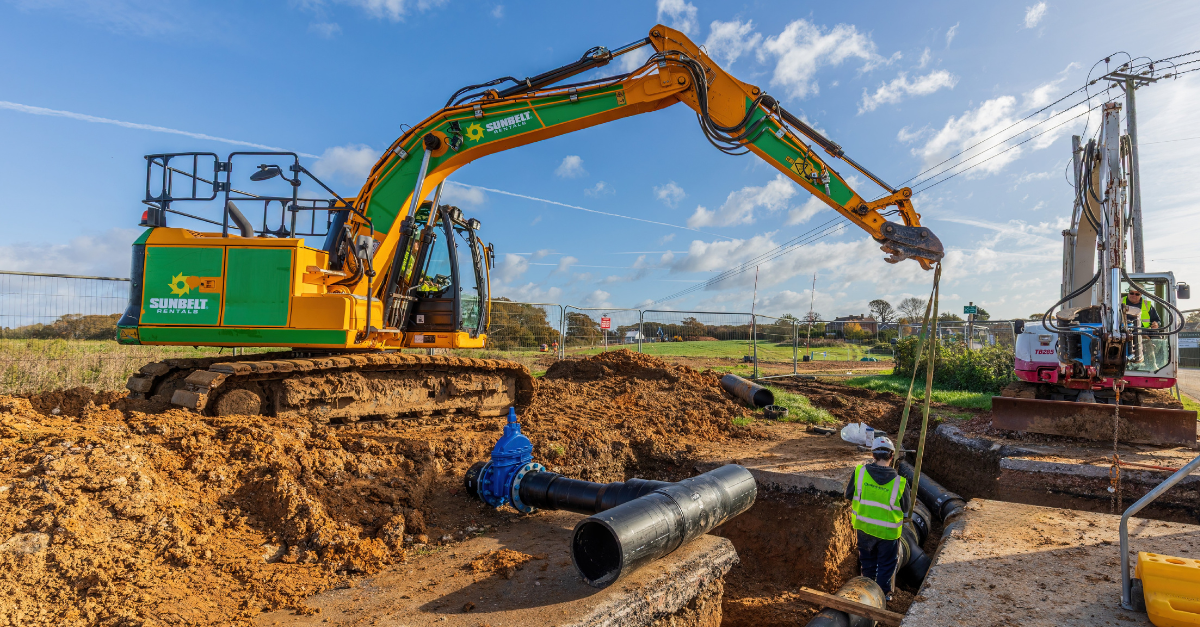
These underground pipes are typically installed using borehole drilling, particularly on developments or sites where space is limited.
Groundwater as a Heat Source
In some locations, groundwater can act as the heat source for a heat pump system.
Groundwater maintains stable temperatures and can transfer heat very efficiently. In these systems, water from an underground aquifer passes through a heat exchanger before being returned to the ground.
Because water conducts heat better than soil, groundwater systems can deliver very strong performance where suitable aquifers are present.
Read more: Welborne Garden Village secures UK’s largest water-source heat network for entire 6,000 home project
However, these systems depend heavily on local geology and environmental regulations. For this reason, most developments use closed-loop systems that extract heat from the ground rather than groundwater directly.
Surface Water as a Heat Source
Water bodies such as lakes, ponds and rivers can also act as a heat source.
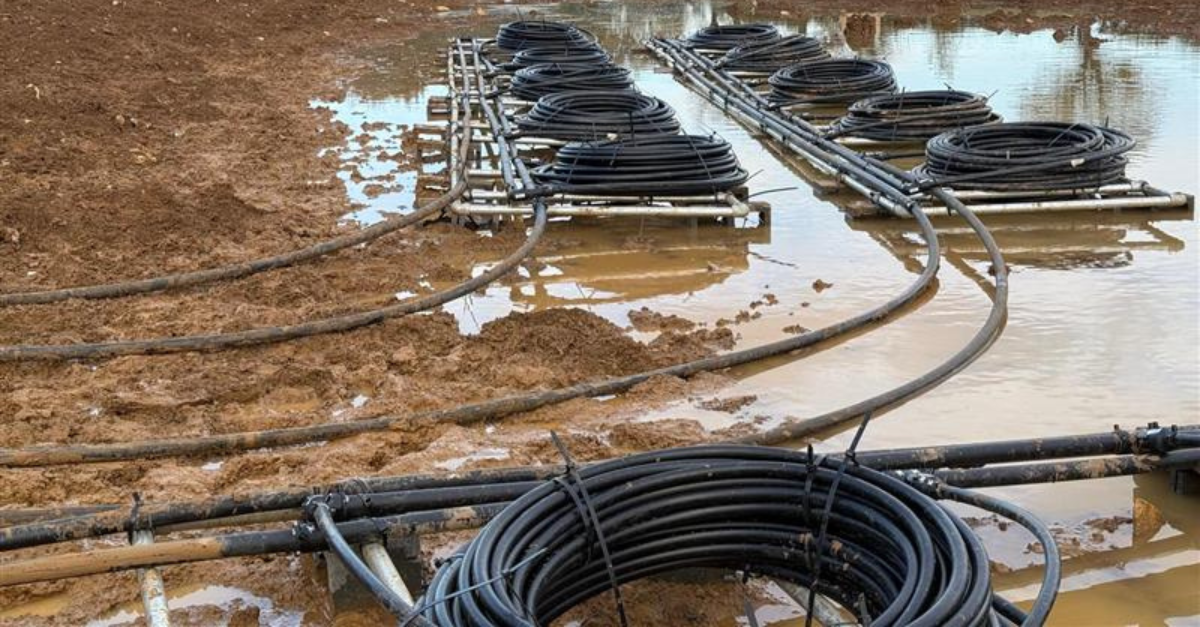
In these systems, pipe loops are submerged underwater where they absorb heat from the surrounding water. Because water stores heat well, surface water systems can be highly efficient.
This approach is particularly suitable for developments located near large water bodies or rural sites where ponds or lakes are already present.
Some large developments combine surface water heat sources with shared heat networks to deliver heating to multiple buildings.
Read more: First step of the low-carbon water-source heat network at Welborne Garden Village delivered
Ambient Heat Networks and Waste Heat Sources
Ground source heat pumps can also work alongside ambient heat networks, where multiple heat sources contribute to a shared energy system.
These networks can combine ground heat with other sources such as:
• waste heat from buildings
• sewer heat recovery
• data centres
• industrial processes
This flexible approach allows developments to capture heat that would otherwise be wasted and distribute it efficiently across multiple buildings.
As more cities move towards electrified heating, ambient heat networks are becoming an important part of future energy systems.

Why the Ground Is Such a Reliable Heat Source
Although several heat sources can be used, the ground remains the most reliable option.
This is because underground temperatures remain stable throughout the year. While outdoor air temperatures fluctuate widely between seasons, ground temperatures change much more slowly.
This stability allows ground source heat pumps to operate efficiently even during cold weather.
Because of this reliability, ground source systems are often chosen for developments that require consistent heating performance.
If you want to explore the broader benefits of these systems, read our article on the advantages of ground source heat pumps.
Choosing the Right Heat Source for a Site
Selecting the right heat source depends on several factors, including:
• site size and layout
• ground conditions and geology
• availability of groundwater or surface water
• development density
• long-term energy strategy
Early feasibility assessments are important to determine which option is most suitable.
Many developers are now exploring ground source systems earlier in the planning process as part of their low-carbon heating strategy.
Read more: Why Early Adopters of Ground Source Heat Pumps Will Lead the New-Build Market

Our team can help review potential options and explain how different heat sources - including ground, groundwater and surface water - could be used as part of an efficient low-carbon heating system.
If you have a project you would like to discuss, or would like a no-obligation discussion, please contact our team at enquiries@rendesco.com.